Tuesday, March 31, 2015

Smashing All of My Circuits


Because it is such a short flight from Seattle, and one that remains in the same time zone from beginning to end, it's hard to accept that coming to Los Angeles means entering a whole other universe. Even in the placid neighborhood of West Hollywood, where I would sleep for the next five days, sharp sunlight cast tropical shadows and the sky was a piercing blue, accented by the fronds of palm trees. Flowers that I usually see in Bangkok were part of the landscape and when I went for coffee on my first morning I was hit by the fragrance of dok gau--a whole hedge of those fragile white blossoms.


There were surprises--the silence of the residential area where I stayed, with so little traffic that this small dude ruled the street.


And flowers that had to have been invented by Dr. Seuss--bottlebrush flowers that are usually found in Australia and India.


I was in this part of town just long enough for contrast; soon after my arrival, my friend the L.A. Resident took me to one of the city's oldest neighborhoods, Eagle Rock. Next door to the bowling alley that was an integral part of the beginning of Reservoir Dogs is a corral of food trucks and an assortment of chairs and tables. More of a community picnic than an outdoor food court, accessorized by craft booths selling distinctive and pricey jewelry, the space was heavily populated with families of small children and gentrification seemed at a minimum.

In fact, according to an Eagle Rock blogger, who moved to the area with the hopes of turning it into Pasadena, the food trucks are discouraging the economics of gentrification, along with the neighborhood pot shops and the carloads of Armenian gangmembers. (Yup. that's what she said.) Her fancy coffee shop is often eclipsed by a food truck selling shaved ice and the local Trader Joe's is suffering too. I don't know about you but that would be enough to keep me patronizing the food trucks every night of the week. Plus the food is damned good.

On the way there, we passed miles of small businesses whose signs were in Spanish. On the way back signs written completely in Thai gleamed through the dark blue night. The air was cool and when I reached my room, I pulled a down comforter around me, closed my eyes, and was dazzled by memories of neon without translation and the fragrance of small ghostly flowers.


Monday, March 30, 2015

Around the World in Five Days without a Passport--Part One


This is what I expected to see in Los Angeles--a fantasy-filled corner brimming with props for rent or for sale. But except for that, the huge CBS complex, and morning preparations for a red-carpet gala evening, the movie business wasn't a keynote of my five days in the city. Instead what I saw was a city that has never heard of assimilation--at least not yet.

I live in a city that's a collection of small towns. Los Angeles is a collection of small cities, each one its own separate entity, independent of its neighboring counterparts. And best of all, each with its own food, which is served to people who want the real thing.

Even in the downtown area, which is being revitalized by turning warehouses into living-lofts and condominiums, the revamped Grand Central Market proved it wasn't just another trendy place to graze. I was dubious when I walked in and was greeted with Egg Slut, but just a few feet away I stopped dead in my tracks. There, behind a cluttered counter, was a plate of crisp and golden khanom krok, the bite-sized coconut-milk-filled pancake that is limp and flabby in this country, assuming that it can be found at all.

The ones at Sticky Rice looked a lot like this: (credit to ch3rri-blossoms.blogspot.com/)


and when I bought a little box of them, the woman who sold them to me told me to be careful because they were still hot. They were perfect, and although I walked the length of the market as I ate them, I knew where I was going to have my lunch.

I had no intention of eating Thai food in Los Angeles--my goals were Mexican and Korean places on this trip. But only a fool would pass up a place that could make khanom krok that was as good (or even better) than what I've enjoyed in Bangkok. Besides, I'd been slapped with a horrendous cold and it was screaming for Thai chile peppers. I ordered the Chiang Mai signature dish of khao soi, sat at the lunch counter, and let the lime and chile go to work on my sinuses while I watched flames shoot up from an open grill. Next time I'm in town, I'm getting the grilled pork neck.

Downtown L.A. is a mixture of nascent gentrification and urban life in the rough. There are at least two separate communities on the streets and they don't seem to mingle much. People who clearly have nothing live their lives on the pavement without panhandling those who clearly have much more,

It's an area that is on the cusp--Skid Row meets Starbucks. At this point it's still affordable to people with fixed incomes--one loft conversion had studios for under $800, utilities included and no pet fee. Yes, I was tempted. Only a block away was The Last Bookstore, an old bank building that is now a mixture of new and used books and very quirky art.


If I lived in one of those studios, one of my neighbors would be the Bradbury Building of BladeRunner fame and across the street from that is this:


There are newsstands


and street murals.


It's a place with pedestrians and parks and a supermarket. It's also, according to a downtown free newspaper, "where some people are quite happy. Others are quite hungry." The Last Bookstore directs its customers to Starbucks when they need a restroom and Starbucks is feeling a bit strained as a result. Famous for their clean toilets, their Spring Street outlet pushes that envelope just a trifle--bring your own toilet paper.

The disparities of this part of the city would become jagged to me if I lived in this neighborhood--and yet there are others...

Friday, March 6, 2015

My Favorite Glutton Strikes Again!

All over the world people are looking for street food, except perhaps for the people who grew up eating it. They’re often looking for more “sophistication” in their dining choices, which range from McDonalds to elegant sous vide joints, depending upon their income levels. They’re replaced by travelers, whose eagerness to find street food is exceeded only by their ignorance. Where? What? When?  (And sometimes)—Why?

Four years ago, Chawadee Nualkhair (www.bangkokglutton.com) brought light to the darkness for Bangkok visitors when she wrote Bangkok’s Top 50 Street Food Stalls, which is now out of print but still relevant if you can find one on alibris or at a used bookstore. (I suggest Dasa Books and Coffee in Bangkok.) This year she brings Thailand’s Best Street Food to eaters whose ambition surpasses their local knowledge—or for Thai residents who are overwhelmed by their culinary choices.


It may seem hubristic to the point of madness to narrow Thailand’s street food choices to a scant 160 pages, but that isn’t what Ms. Nualkhair is doing. She has written a sort of eater’s primer, giving a springboard of information that will launch the reader’s own journey of discovery—or, with any luck at all, her own series of street food guides to the regions she introduces in her latest book.

She begins with questions: Is street food dying out? What is a street food stall? How did she make her selections for this book? The question and answer that I loved best in her first book is absent here: How do you determine the hygiene of a particular vendor? Nualkhair’s advice is look carefully at the jars that hold condiments; if they aren’t clean, walk away.

A visual glossary to different kinds of noodles with accompanying ingredients and broth, fried noodles, rice dishes, appetizers and snacks, desserts, and beverages, with names in both English and Thai is almost worth the price of the book. Don’t want ice in your drink? Point to the Thai script for it and shake your head vigorously with a dramatic rendition of “Nononono." The only thing missing is the Thai script for “Where is the toilet?” which just might come in handy.

Otherwise the reader is covered, beyond a doubt. There are maps to each culinary destination; there are names and addresses of the food stalls both in English and in Thai, there are wonderful and tempting photographs (that certainly deserve more space than they have been given), and every so often there is a recipe—Elvis Suki’s Grilled Scallops, anyone? Adventurous eaters are even told which stalls have restrooms and which do not provide bathroom tissue.

The choices range from north to south, with the greatest concentration given to Bangkok. But every region is given careful attention—think quality over quantity, along with information that will help in conducting further independent study.

Really, what more does anyone need? On my next trip to Thailand, this book is going along too.


Monday, March 2, 2015

Mrs 'Arris Goes to Paris--Seattle Version

My neighborhood is not known for its sartorial elegance. There are cute and perky girls who look great in the latest trends, many of which come straight from Tokyo, but they're cute, not drop dead. But then we live in a city where a visitor from San Francisco once said, "The people are so earthy, so real so Paul Bunyonesque." And that was at least ten years before grunge took over--Seattle has always had the dowdy and well-made garb of old money or the utilitarian clothing of fishermen and loggers.

So when I saw a coat on the street outside my apartment that was unlike I had ever seen in my life, I almost stopped moving. It looked something like this:


The woman who wore it looked as though she'd been born with it on--it was part of her, when it could well have overwhelmed her. Briefly I wondered where she was from and then carried on with my errands.

When I returned, I did stop in my tracks. In the window of Kobo, a neighborhood shop/gallery was a coat, much like the one I had seen earlier. It floated like a soap bubble or a spiderweb caught in fabric. I went into the shop that I rarely ever frequent and asked "What is that coat in the window? It's the most beautiful piece of clothing I've ever seen."

"Come and meet the designer," I was told, and was led to a room filled with color and fabric collage and clothes that looked as though they would dissolve at a single touch.

As a woman smiled at me, I blurted. "I saw you earlier today and I thought you were the most perfectly dressed person. I almost stopped to tell you."

"Here is the designer," she gestured toward a woman who was much sturdier than she, with the hands of a worker, eyes filled with a kind of divine madness, and a genuinely warm smile.

The clothes were magnetizing me. I moved toward them, trying not to moan and reaching out with one fingertip. "The colors," I breathed. "They are natural," the designer said, "for the blue, I use a plant." "Indigo," I murmured and she smiled, "Yes."

I was drowning in the blues: turquoise, aqua, deep blue. It was like walking through a tide pool, with many magical objects shimmering through the hues. The fabric was a treasure trove of textures and small pieces of flotsam, bits of beach glass and shells and silkworm larva that looked like gold leaf.


"Put something on," the designer said and I said, "I'm too big." "No," she said and her companion held out one of the deep blue overdresses. Tentatively I put one arm in a sleeve, then the other, and stood before a mirror, spellbound.

There is an enchantment connected to Hatsumi Yoshida's clothes. When a piece is on the body, it belongs there. I stood with the same look of belonging to the fabric that I had noticed as part of the beautiful woman on the street earlier in the day. These clothes become whoever puts them on.

And they are playful--a Chanel-cut jacket became a piece of ribbon candy, something that could be worn every day as part of the owner's life. A lace scarf that looked as evanescent as sea foam became a bolero, then when turned upside down, a long jacket. Necklaces that resembled regal Elizabethan collars were designed to be scrunched into different shapes once on the body.

For art, none of these things were expensive, For me, all of it was. I finally began to say goodbye, looking wistfully at the beauty that I wanted so much to own.

"Wait," Hatsumi said, "I have something to give customers." She held out a little bag filled with tiny gleaming beaded pins that looked like a child's dream of silkworms. "But I'm not a customer," I protested. She put a number of different colors on the counter and said, "Choose one."

I went home still wrapped in the magic of her clothes. I dreamed of them and the next morning I went out and bought art to keep, a piece of forest and sea on a bag with a long string of beads to keep it on my shoulder. I carried it when I followed some dragon and lion dancers through the streets where I live and it felt as though it had always been with me.

Hatsumi Yoshida's studio is in Bali, a place I had never wanted to go--until now. You can see her work at www.studiosuna.com

Tuesday, February 24, 2015

Fear of Cooking


I don't think it's cooking that I'm afraid of really--it's the idea of a routine that makes me flinch and babble. Three square meals, breakfastlunchdinner, eating by rote, using what's in a pantry or refrigerator because it's there, not because it appeals to me at the moment--these are the things that came to mind when I thought of cooking.

And yet since I came back from Thailand, I did plummet into a routine. My meals almost always were plain yogurt, or a lean pork roast, or something to do with chicken. Eating was only joyful if I chopped and pounded for hours to make a Thai dish or if I went out to eat. Or if I succumbed to a pint of really good ice cream. Even I began to realize that this was as boring as any menu from the Better Homes and Garden cookbook.

One day a few weeks ago, I went to Big John's PFI to browse. This is a very unglamorous but exciting food emporium that actually has "staff recommends" cards under the jars and cans and boxes. They have bulk spices and planks of chocolate and salt from all over the world. Their olive oil section is as well-stocked as a single-malt Scotch area in a good liquor store, and as expensive as one too. Their cheese and cured meats case is dazzling, although I don't like either, and the back of the store is devoted exclusively to pasta in all of its glory.

Everything else is in cans or jars, but this is not the canned food I grew up with. I wandered through the shelves, picking up whatever seemed interesting to me, and when I finally reached the counter, I could barely hoist my basket up to the cash register.

Paul on the road to Damascus, me in PFI--it was that kind of turning point. I came home with harissa from Morocco, imam biyaldi from Bulgaria, two different kinds of hot tomato and pepper sauce from that same country, capers, olives, Italian tomatoes in a box, and many different kinds of beans, including fermented ones.

Because I'm playing with canned food, it doesn't feel as though I'm cooking. Almost every day I combine a few things, squeeze in the juice from a fresh lime, after first tossing some badly chopped garlic and Thai chile into heated olive oil. While that simmers, I steam some jasmine rice, thinking of my mother's rice and beans that she learned to cook in Mayaguez. Different flavor principles, same protein values.

It's fun. There's nothing routine about it--at least not yet. And because I live in a city with many different kinds of grocery stores, there's no reason for it to ever go in that direction. Today I bought some chorizo and combined it with that harissa and some Italian tomato sauce and two kinds of beans. At first it seemed like a mistake but it simmered into something that's rich and strange.

It's not cooking. It's amateur alchemy, and I like it.

Sunday, February 15, 2015

Dangerous Liasons

It's always the bad guys who carry the most clout. In memories, in books, in movies, saturnine smiles beat dimpled grins every damned time.

One of my favorite movies comes from Thailand, in which the mild and suicidal Japanese librarian turns out to be a mild and homicidal killer who fled the bonds of the yakuza. When I choose a flick by Wong Kar-Wai, it's always 2046, with Tony Leung channeling the baser instincts of Rhett Butler, rather than In the Mood for Love, where he is the sweet betrayed husband. And I once had a mammoth argument with a bookselling colleague over the character of Sam in Infernal Affairs. I maintained he was my kind of guy, while my friend sputtered, "Dude's a psycho-killer." Well, yes...

Last night I found out where this predilection comes from, when I watched John Sayles' Baby It's You. Vincent Spano as the Sheik is quintessential cool, even after divulging that he's nicknamed after a condom brand. Even when he's lip-synching to a jukeboxed Frank Sinatra. Even when he finds out that the bonds of social class are stronger than any forged by puppy love.

Watching this as a 60-plus-year-old woman, I'm well aware that the Sheik is a born loser who will be lucky to get a union job somewhere in New Jersey. And yet, he'll always know how to drive a fast get-away car, rule a dive-bar, and carry off a cheap tuxedo--plus the guy can dance, slow-dance, better than anyone else at the prom. That's not a skill that fades over the years.

When I was in first grade, in a one-room schoolhouse where everybody went out for lunch recess at the same time, there was an older man, an eighth-grader, who wore engineer boots, a black leather jacket, and a t-shirt with a pack of cigarettes tucked under the sleeve near one of his biceps. I couldn't stop watching him--he was that cool. He ended up a complete flop in life, naturally--but somewhere at his core, I knew he still had the capacity to win a drag-race.

Yeah, Tony Romano turned into Vincent Vega, but even with that greasy ponytail and pitted complexion and abysmal conversation, he still had it. He was still, at the heart of the matter, cool.

Is this a mental deficiency that ended with my generation? Have the girls who came along post-first-wave feminism grown up without that yearning for modern-day Heathcliffs? Is this a form of "Every woman loves the boot in the face" masochism that deserved to die out? Maybe.

But Caravaggio will always be my favorite character in The English Patient and I never walk into a room without registering the guy who looks as though he might be a mafioso. It's an attitude that just doesn't die, it just lies dormant under all of the wrinkles.

Tuesday, February 10, 2015

Reality? No Thanks.

I've been sick for over a week, but still I don't think that's an excuse. I've ignored the free cable TV offerings that are included in my rent for almost two years, except for major league baseball, so why I turned to it now is inexplicable and maybe unforgivable. Perhaps I can blame the internet, which is an easy way to waste time while running a low-grade fever. Somehow when I was noodling around on that, I found that a family I was acquainted with in Alaska had their own reality show that involved living la vida homestead on the Kenai Peninsula.

When I was much, much younger, I briefly went to school with the leading man of this opus, and I grew up on a homestead myself, and I was feeling too wretched to concentrate on reading. I'd never seen a reality show and I wasn't too sure of what they were exactly, except reality didn't seem to play a large part in them, according to what I'd read. Paris Hilton on a farm? Mafia wives brawling in New Jersey? Sarah Palin and her offspring?

I do remember much too vividly the reality of homestead living: eating far too many meals of beans and potatoes, the smell of a freshly-killed moose when it was slit open to be cleaned of its offal, the dismal cold mornings before a fire was kindled in the wood stove, the dubious aerobic benefits of racing to the outhouse several times a day, hauling wood and water home...Oh the list goes on and on, with a Greek chorus in my head asking the same question repeatedly. Why would anybody continue to live that way in the 21st century? And even if they wanted to, could they?

Even in the 1960's, homesteading on the Kenai was changed forever by citizen-band radios and pioneer access roads put in by the state of Alaska. Subsistence living, a shaky affair even in the early days of homesteading, had long ago been eroded by a depletion of game and an ability to order groceries from wholesale catalogs. Now, in our era of iPads, Amazon, and the Information Highway, satellite television, and streaming Netflix, the isolation that was the keynote of homesteading seemed downright impossible to achieve. How was this family managing to still maintain that particular life?

The answer seems to be "Very, very carefully," and with a generous helping of heavy equipment. This particular family has lived on this homestead for three generations and is busily creating the fourth. Over the decades, they have accumulated an all-terrain vehicle, a landing carrier, a small fishing boat, and a couple of backhoes, along with an impressive collection of firearms. They also have increased the family's original homestead allotment of 160 acres to 600, which may rival the size of Rhode Island.

Hills of pastureland overlooking a bay and rocky beaches form the setting for what seems to be a rudimentary farm, with a small herd of cows, some horses, and poultry. It seemed strange that this extended family living in a part of Alaska that is far from Arctic temperatures wouldn't have enough livestock to keep them alive through the winter. But maybe that would create too large a carbon footprint, whereas hunting wild game for winter supplies is part of the natural order of things.

Unless of course, the hunter hops into a bush plane and flies 625 miles to an island in southeastern Alaska to bag a deer that dresses out to 90 pounds of fresh meat. For a large extended family that seems to consist mostly of strapping males, that would probably last for a week. Why not, I wondered, stay closer to home and bag a moose or two?

Moose meat has long been the traditional staple of Kenai homesteaders but not to this family. They set their sites on bears, black bear which live on fish and berries, and are always a form of gustatory roulette. If bears have been living on fish, their red meat will taste rather horribly of salmon. Even if they've been glutting themselves on berries, their meat is far less succulent than moose. But even so, this family is quite excited about bagging bears, to the point that one of them even dives into a thicket of alder to pursue a bear that he might have wounded. Strange behavior--unless the man in question truly does harbor a strong death wish.

And except for a wife or two, this family is resolutely male, even though the generation I had known was quite female, with six girls and two boys. Only one of the girls shows up in the episodes I watched, and then quite tangentially--a mosaic tile, not even a cameo. Since two of the daughters still live on the homestead, that seemed peculiar.

Then I realized not only the female line of this family was invisible--so were all of the primary dwelling places. What is shown are hunting cabins, pastureland, chicken coops, small boats
and the males who dominate this setting--along with the hale and hardy women they have married. Suddenly I had the feeling that what is being shown is a homestead preserved in amber, an Alaskan version of Colonial Williamsburg.

But what has not been preserved hermetically is the leading male character, whom I last saw at a community party when we were both fifteen. Suddenly the reality component of this show became devastatingly clear and I don't recommend it to anyone. Seeing a boy whom you remember as a young teenager peering out from the grizzled countenance of an aging man with stringy white hair is enough to throw any woman into shock. I went to bed to dream of living on a homestead and woke up with a piercing headache, a pervasive nausea, and a return of my low-grade temperature.

So much for reality--bring on Downton Abbey, thank you very much.

Tuesday, January 20, 2015

River City


A year ago I was in Hong Kong and the city was awash in Lunar New Year preparations. Crowded with shoppers, many of whom made commando-raids from the Mainland, stuffing their wheeled suitcases full of chocolates and butter cookies, most of the streets on both sides of the harbor were almost unwalkable. So I often left after breakfast and went to a much smaller city with a much slower pace.

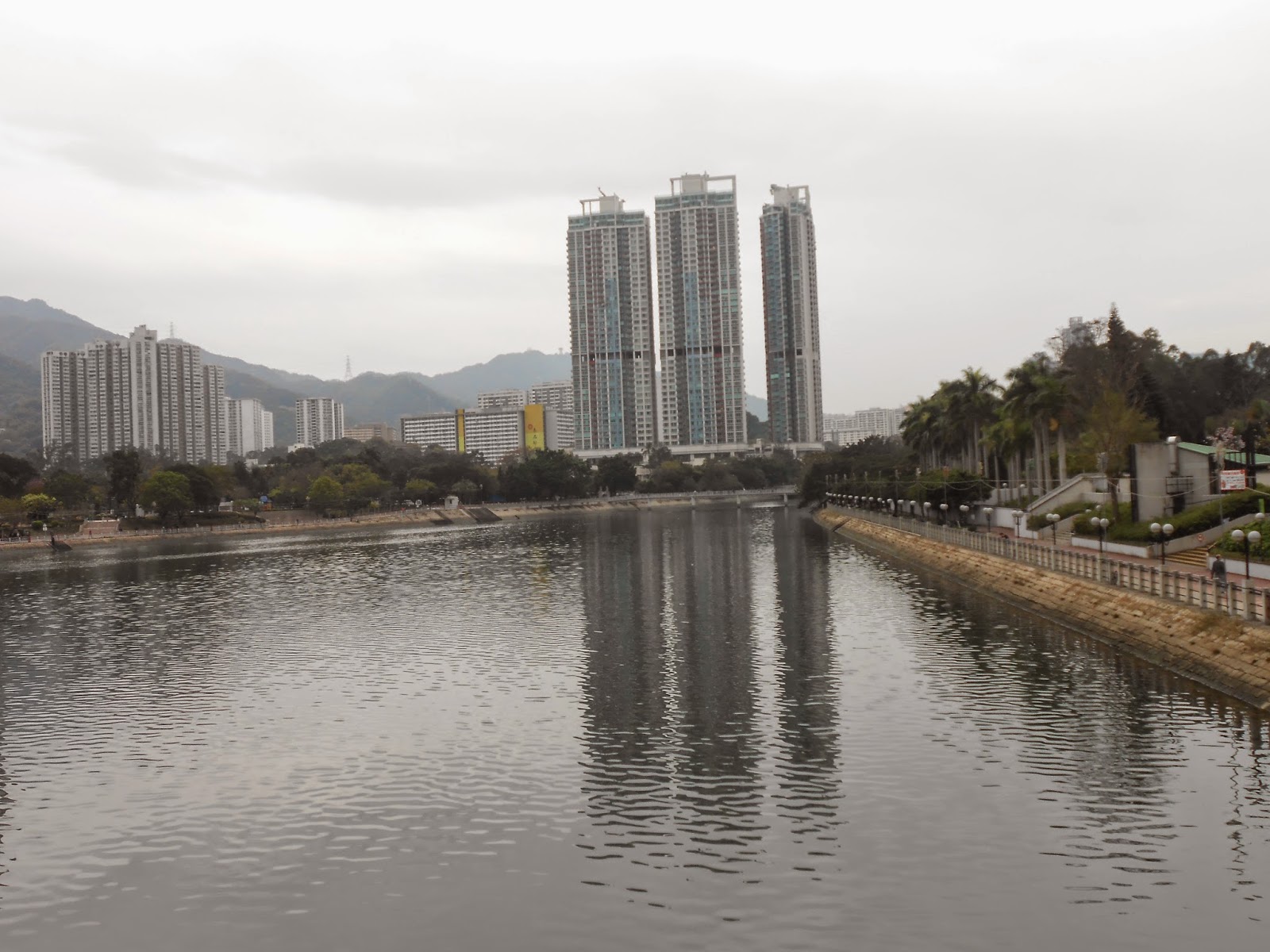
This is Shatin. No, it's not very sophisticated. I like that.


And it's built along a river, which may account for its pace.


It's the sort of city where you can always find a place to sit.


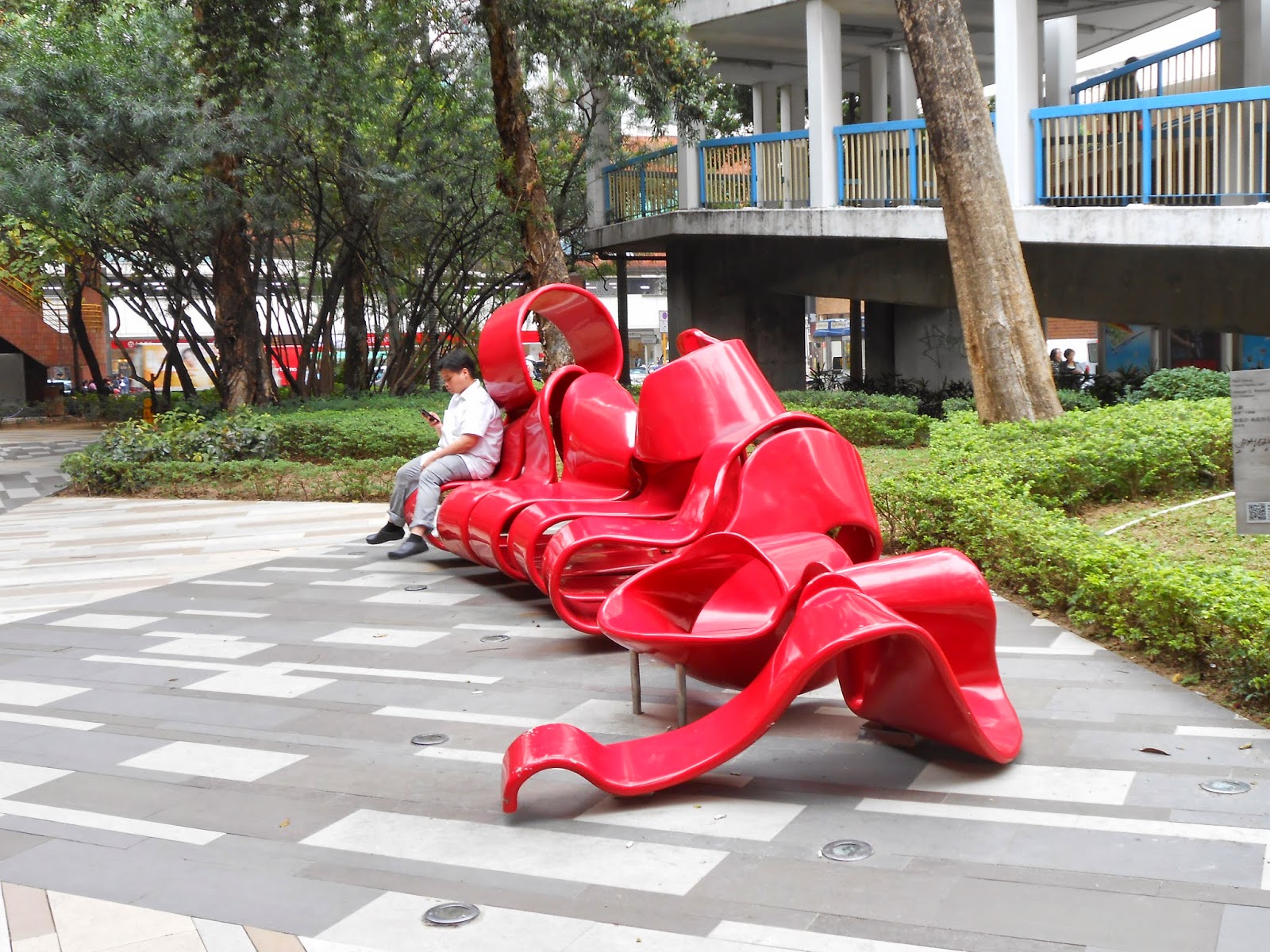
The public art is exuberant,


and there are egrets. On my first visit there, I came in late afternoon and the riverside trees were filled with them.


But this is what draws me back to Shatin, even more than the river or the wonderful historical museum that I always visit. I caught a glimpse of an old mansion, peering from the trees across the river, silhouetted against the hills.


When I drew closer to it, I saw this.


It is in the middle of a large yard, and is surrounded by a fence. Construction is underway nearby, with makeshift houses for the workers.


This is the lane that runs past it.


Every year, I'm afraid it will be gone, replaced by something like this, that exists in newer communities like Lohas Park,


But so far it still beckons to me each time I go to the river,


with this rising behind it.


It is always a fulfilled promise, each time I go to Shatin.

Tuesday, December 30, 2014

The Deadliest Form of Travel

The latest tragedy involving a Malaysian air carrier dominates the news at year's end and the mystery of why Air Asia's short hop from Indonesia to Singapore ended so terribly is still unsolved. Weather is the most prevalent theory and the most plausible, since it's thunderstorm season in Southeast Asia right now.

This still is a troublesome hypothesis, since flights in that region safely negotiate thunderstorms with regularity; these are not unusual events for airline pilots. What sticks with me are memories of past Air Asia flights and why I no longer use that carrier, even though its fares are often so low that it seems ridiculous not to.

My last journey with Air Asia was from Hong Kong to Penang, a quick flight that takes only several hours. It was so turbulent that the man sitting beside me crossed himself and began to pray, and I have never been so happy to touch Malaysian soil. Other Air Asia flights before that were always significantly more dramatic than I would have liked, although not as consistently bad as my last. "I don't use them anymore," a friend who frequently commuted by air between Bangkok and Ho Chi Min City told me, "I'd rather pay more and have a good flight. Air Asia always ends up frightening me."

"Why didn't the pilot turn back after being denied a change in route?" is a resonant one. Does Air Asia, as a budget carrier, receive routes that are less desirable than other airlines? Are pilots discouraged from aborting a flight? Will anyone ever know?

Still, even Air Asia is a more secure and less dangerous option than the bus journeys that cross Southeast Asia every hour of every day. Fatalities of bus travelers were regularly reported in Penang's daily papers when I lived there, and the Bangkok Post rarely lacks similar stories,

Thailand alone boasts the second-highest rate of traffic deaths in the world, with long-distance buses taking the lead in those fatalities. Recently a tourist van en route to Bangkok's airport crashed into a highway maintenance truck and claimed several lives. Today's news told of severe injuries incurred by tourists in Phuket, when a bus taking them from one beach to another hit a car and "tumbled down a small hill." And truthfully, any of us who have lived in--or visited--Bangkok have faced more danger when taking a motorcycle taxi than on any airplane flight, no matter how turbulent.

But even so, the 7,784 highway deaths in Thailand in 2012 (the most recent statistic that I could find online) dwarfs the 475 deaths in the air worldwide for the same year. What strange mental quirk makes us fear the skill of highly trained pilots and trust in someone who drives blissfully free of any regulation at all?

Sunday, December 28, 2014

Hong Kong to Me


I'm not stealing from Emily Hahn in this title; I'm paying homage. She was the one to first introduce me to Hong Kong in her splendid book, China to Me. When I first went to that city, I walked with Emily through Wanchai, looking for buildings that were of her vintage, loving the ridiculously crowded streets that she would have walked through too.


Then I went to Kowloon, which was a whole other world to Emily. It was to me too. While Hong Kong Island seemed familiar to me, a mixture of Manhattan and San Francisco with Chinese characteristics, Kowloon was like Bangkok on steroids. Everything I loved about Thailand's capital was multiplied here, along with the rampant mall culture which I didn't love at all.


However there were parts of Kowloon that were as chaotic and as fascinatingly ugly as anyplace in Bangkok, and its diversity of population delighted me.


And it was connected to the Mainland. Soon I began to ride the MTR into the New Territories, where different facets of Hong Kong awaited. For me, this is the most interesting part of the former Crown Colony, although some of it made me sad.

This is a residential area developed by the MTR, Lohas Park. It was still being built when I went there. Across the highway were hills with farmhouses and groves of trees. Where I stood, the buildings gave me honest-to-god vertigo when I tried to see their tops.


They formed their own forest that threatened to blot out the sky.

When I traveled on to a completed residential area, Po Lam, the sky was hard to find and pedestrians moved under this landscape. It was a cloudy day but the sky was even darker in this place. Within a few minutes I had to escape in search of light.


And I found it, in an older city that is built around a river. Shatin is my favorite part of Hong Kong because it has been planned for people to enjoy.


And then there are the islands--small communities that retain as much tradition and history as this sentimental traveler could ever wish for.


But as much as I love them, insularity isn't an abstract term. These islands let outsiders come, but they love to see them go.


Unlike Shatin, where people dancing in the riverside often invite me to join the party. Someday I hope I can, for more than an afternoon.